
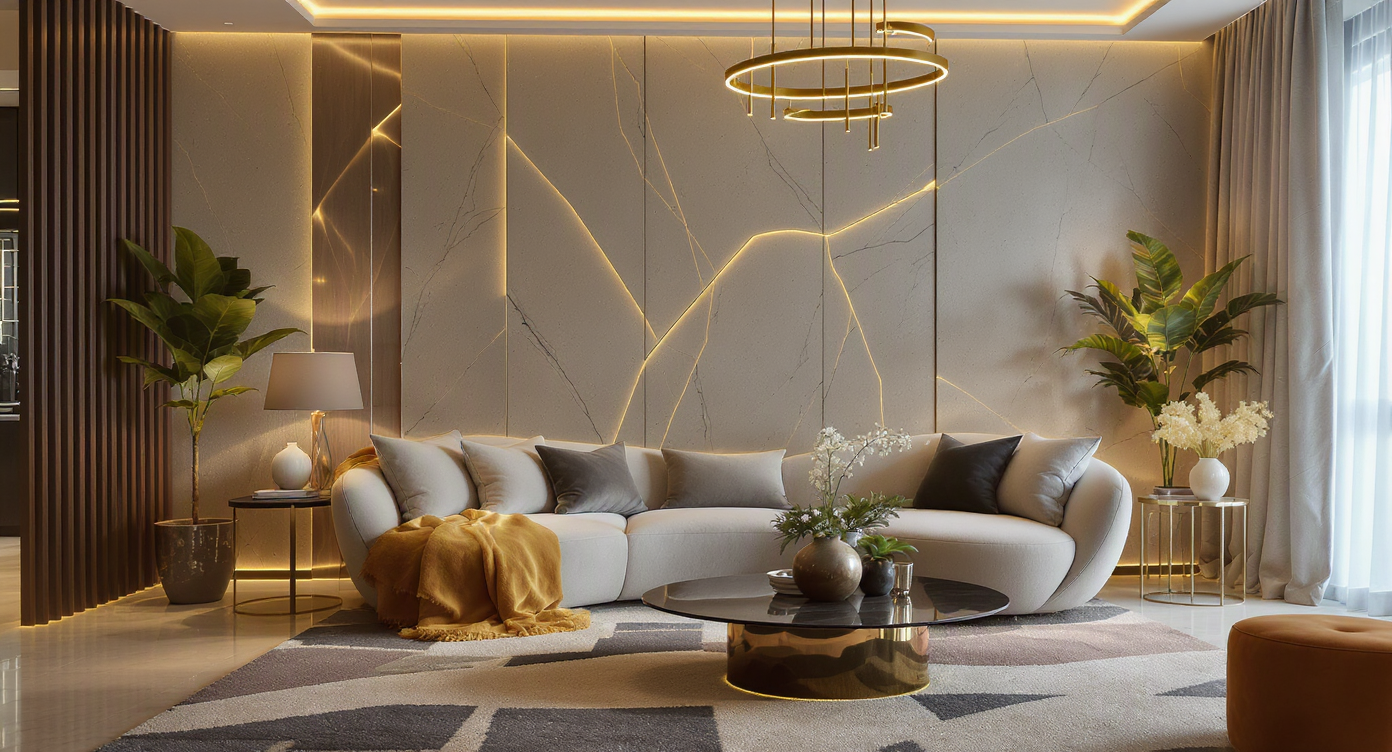
The Indian living room has always been more than just a seating area. It is where guests are welcomed, festivals are celebrated, and families gather for everything from evening tea to weekend movie nights. As urban homes evolve and homeowners seek a balance between aesthetics and practicality, living room design trends in India for 2026 are focusing on smart use of space, warm textures, flexible furniture, and locally relevant materials. Whether you live in a compact 2BHK in Mumbai, a villa in Bengaluru, or an independent house in Jaipur, the upcoming design trends emphasize comfort, durability, and personalization. Below are some of the most influential living room design directions shaping Indian homes in 2026, along with practical ideas, price ranges, and brands that are popular among homeowners.
Warm Minimalism with Indian Textures
Minimalism is still popular in 2026, but it is no longer cold or overly sterile. Indian homeowners are adopting warm minimalism—clean layouts combined with earthy colors and tactile materials. Think beige walls, light wood furniture, cane accents, and soft fabrics that make the room feel calm yet inviting.
Instead of heavy carved furniture that dominated earlier decades, homeowners are choosing simple sofas and accent chairs with subtle Indian touches like woven cane panels or brass handles. Brands like Urban Ladder and WoodenStreet offer minimalist sofa sets between ₹35,000 and ₹85,000 that fit well in modern apartments.
- Use neutral wall shades like warm beige, sandstone, or soft greige.
- Add texture through jute rugs, cane furniture, or linen curtains.
- Limit décor items to 4–5 meaningful pieces rather than overcrowding shelves.
- Combine light wood furniture with matte metal or brass accents.
This style works particularly well in smaller Indian living rooms because it keeps the space visually open while still feeling cozy.
Multi‑Functional Furniture for Compact Homes
With urban apartments becoming more compact, furniture that serves multiple purposes is a major trend. In cities like Mumbai, Pune, and Gurgaon, living rooms often double as workspaces, entertainment zones, and even guest sleeping areas.
Sofa beds, nesting tables, and storage ottomans are increasingly common. For example, a sofa cum bed from Pepperfry or Nilkamal Homes typically ranges between ₹25,000 and ₹60,000 depending on fabric and mechanism quality.
- Choose a center table with hidden storage for remotes and magazines.
- Use modular shelving that can be rearranged as needs change.
- Opt for foldable side tables for work-from-home setups.
- Consider wall-mounted TV units to free up floor space.
If you're planning a full living room setup, comparing multiple furniture vendors can save significant money. Platforms like GetMyQuotation allow homeowners to request quotes from different interior vendors and compare pricing before making a purchase.
Statement Lighting as a Design Feature
Lighting is no longer just functional; in 2026 it plays a central role in living room design. Statement lighting fixtures such as sculptural pendant lights, layered ceiling lighting, and floor lamps are becoming focal points in Indian homes.
Modern lighting brands like Havells, Wipro Lighting, and boutique sellers on marketplaces such as Orange Tree offer decorative lighting ranging from ₹3,000 for simple pendant lamps to ₹25,000+ for designer chandeliers.
- Use layered lighting: ceiling lights, floor lamps, and wall sconces together.
- Install dimmable LED lighting for movie nights and gatherings.
- Add a floor lamp near reading chairs or corner seating.
- Use warm white LEDs (2700K–3000K) for a cozy ambience.
Good lighting can dramatically improve even a modest living room without requiring expensive renovation.
Earthy Colors and Nature-Inspired Palettes
Color trends in India for 2026 are heavily influenced by nature. Shades inspired by clay, terracotta, olive green, and muted mustard are replacing the cool greys that dominated the last decade.
Paint brands such as Asian Paints, Nerolac, and Berger Paints are promoting earthy color collections designed for Indian homes. A standard repaint for a living room usually costs between ₹8,000 and ₹25,000 depending on size and paint quality.
- Pair terracotta accent walls with neutral sofas.
- Use olive green cushions or throws for subtle color contrast.
- Introduce indoor plants like rubber plants or fiddle leaf figs.
- Combine wood tones with natural fabrics.
This palette works particularly well in homes that receive strong daylight, which is common in many Indian cities.
Smart Entertainment Walls and TV Units
The television wall has evolved into a complete entertainment feature. In 2026, homeowners are opting for custom TV units with concealed wiring, floating cabinets, and integrated lighting.
Modular TV units from brands like Godrej Interio, Durian, and IKEA India typically range from ₹12,000 to ₹70,000 depending on material and size.
- Use floating cabinets to create a cleaner, modern look.
- Install LED strip lighting behind the TV panel.
- Add open shelves for books, plants, and décor pieces.
- Choose matte laminate or wood veneer for durability.
If you're considering custom carpentry, getting multiple vendor quotes can help manage costs. Many homeowners use GetMyQuotation to compare pricing from local carpenters and interior designers before finalizing a design.
Blending Traditional Elements with Modern Furniture
Another major trend in Indian living rooms is blending contemporary furniture with traditional décor pieces. Instead of designing an entirely ethnic or entirely modern space, homeowners are mixing styles.
For example, a modern sofa from IKEA might be paired with a vintage brass urli, handwoven dhurrie, or carved wooden side table from Rajasthan.
- Use traditional textiles like ikat, block print, or kantha cushions.
- Add a single antique or handcrafted statement piece.
- Display local art such as Madhubani or Warli paintings.
- Mix metal finishes like brass with modern matte black fixtures.
This approach keeps the room culturally rooted while still feeling fresh and modern.
Comfort-First Seating Layouts
Indian living rooms often host large gatherings during festivals or family visits. In 2026, seating layouts are being designed to prioritize comfort and flexibility rather than rigid formal arrangements.
Sectional sofas and modular seating systems are gaining popularity because they adapt easily to different situations. A good quality sectional from brands like Urban Ladder or Pepperfry usually costs between ₹60,000 and ₹1.5 lakh.
- Choose L-shaped sofas for corner spaces.
- Add pouffes or ottomans for extra seating.
- Keep at least 3 feet of walking space around seating.
- Use washable fabrics if you have kids or pets.
Flexible seating makes the living room more functional for both daily life and large gatherings.
Budget-Friendly Décor and DIY Personalization
Not every living room upgrade requires a major renovation. Many Indian homeowners are improving their living rooms through smaller décor upgrades and DIY personalization.
Online marketplaces such as Amazon India, Urban Ladder, and Home Centre offer affordable décor items ranging from ₹500 wall art to ₹5,000 decorative mirrors.
- Create a gallery wall using framed family photos.
- Use large mirrors to make small rooms appear bigger.
- Swap cushion covers seasonally for a fresh look.
- Add layered rugs for visual warmth.
If you're planning larger décor upgrades like custom shelving or accent walls, comparing vendor quotes through platforms such as GetMyQuotation can help you find reliable professionals within your budget.
Conclusion
Living room design trends in India for 2026 reflect a shift toward practicality, comfort, and personal expression. Instead of copying international showroom styles, homeowners are creating spaces that work for Indian lifestyles—spaces that accommodate guests, support everyday living, and reflect cultural identity. Warm minimalism, multifunctional furniture, earthy color palettes, smart lighting, and blended traditional-modern décor are shaping the modern Indian living room. Whether you're planning a complete redesign or just a few upgrades, thoughtful furniture choices, good lighting, and personalized décor can transform your living room into the true heart of your home.


